Lawn Alternatives for the Aussie Climate: When to Ditch the Grass
By Charlie Albone
I’ve always loved a good lawn. There’s something about that soft, green carpet underfoot that just feels right — a place for kids to play, for entertaining, or simply stretching out on a warm afternoon. And when it’s healthy and suited to the space, a lawn can be a beautiful part of any garden.
But across Australia, conditions can be tough. From humid coastal zones to dry inland regions, and cool, shaded southern gardens, lawns don’t always thrive the way we’d like them to. That’s when it’s worth asking the question: is grass the right choice for every part of this space?
Because sometimes, it’s not about getting rid of lawn altogether — it’s about using it more thoughtfully.
Where Grass Starts to Lose
In some parts of the country, lawns struggle with heat and drought. In others, it’s heavy shade that causes thin, patchy growth. Then there are those tricky spots with compacted soil, poor drainage, or areas that just never seem to perform, no matter how much effort you put in.
If you’re constantly watering, reseeding, or staring at bare patches, it’s usually a sign the lawn is working against the conditions rather than with them. That’s where alternatives come into play.
Start with how you use the space before making any changes. I always ask: What is this space actually for? If it’s for kids or pets, you might keep a section of lawn where it performs well. But often, there are areas of grass that don’t really get used. They’re just there because that’s what we’re used to seeing.
Once you rethink that, you start to open up a lot more interesting possibilities.
Groundcovers Worth Knowing
Groundcovers are one of the easiest and most effective alternatives to lawn, and there’s something to suit almost every climate.
In sunny areas, hardy natives like creeping boobialla or pigface can handle heat and dry conditions while still giving you that soft, green look. For cooler or shaded parts of the garden, options like native violet, mondo grass or dwarf liriope can create a lush, low-maintenance carpet where traditional turf struggles.
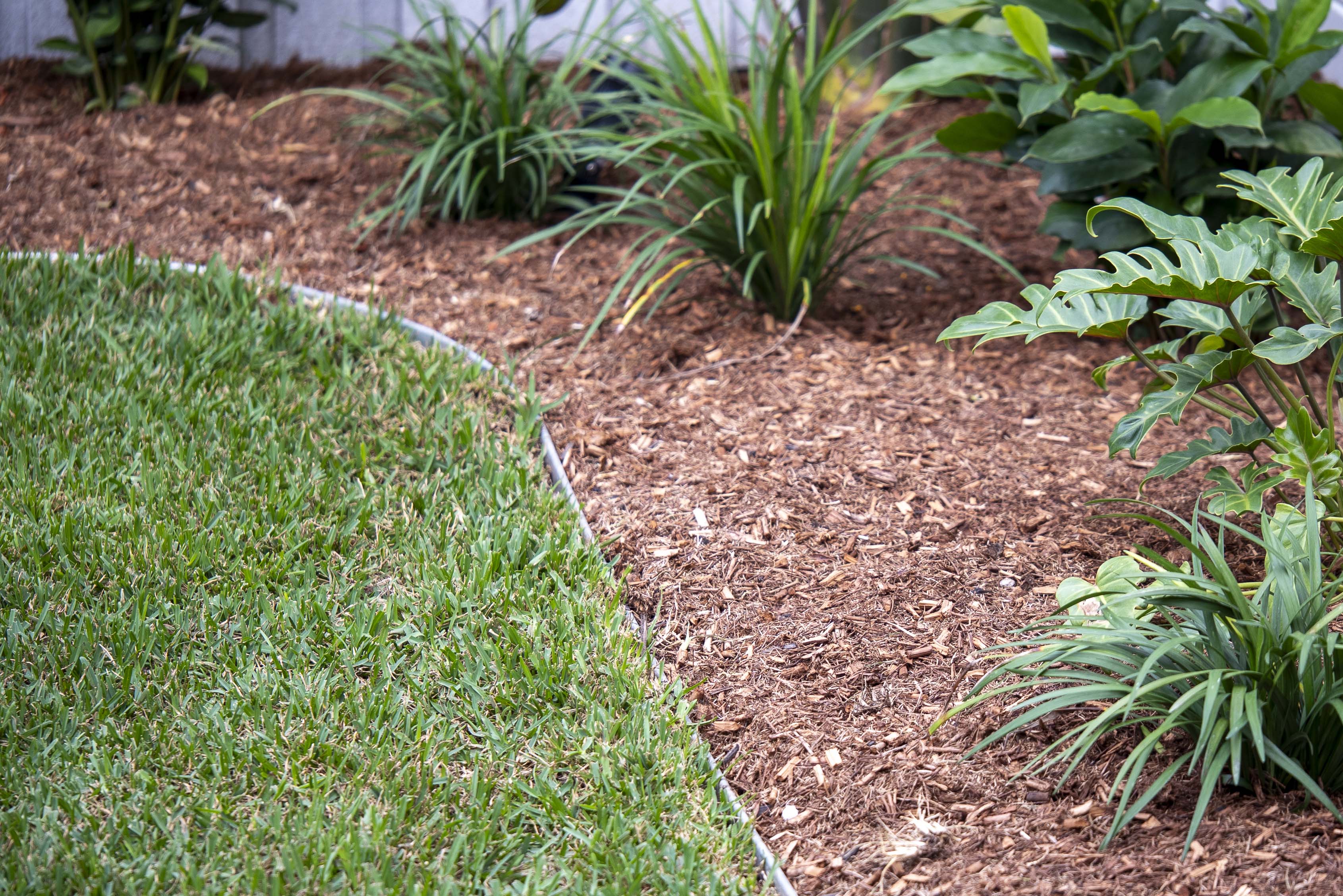
They don’t need mowing, they hold moisture better than lawn, and many bring texture and even flowers into the space. Using Shapescaper steel edging to define these areas makes a big difference. It keeps everything contained and gives the planting a clean, intentional edge that lifts the whole design.
Gravel Done Properly
Gravel can be a fantastic solution, particularly in dry climates or high-traffic areas. It’s low water, low maintenance and, when done properly, looks sharp and contemporary. The key is structure. Without it, gravel can feel loose or unfinished. Defined with Shapescaper edging, pathways and open areas stay crisp and controlled, creating a strong framework for planting to sit around. Pair gravel with feature plants, ornamental grasses, natives or small trees, and it becomes a designed space rather than simply a practical one.
Breaking the Space Into Zones
Rather than one large expanse of grass, many Australian gardens are shifting towards layered planting, breaking the space into zones that feel more usable and visually interesting. Garden beds, pathways and seating areas all work together to create a garden with greater purpose and character.
Raised planter boxes are a great way to introduce that structure, particularly where soil conditions aren’t ideal. I often use Shapescaper planter boxes to build up areas, improve drainage and create depth in the garden. They also give you greater control over soil quality, which is especially valuable in tougher climates.
When you reduce lawn, you’re not losing space — you’re redefining it. A shaded seating area. A fire pit zone. A productive herb garden close to the kitchen. These are the spaces people tend to use every day. Steel edging helps tie everything together, defining different areas without making the garden feel closed in or overbuilt.
This isn’t about ditching lawn completely. In the right spot — with good sun, suitable soil and enough space to thrive — it can still be the perfect solution. But it doesn’t have to be everywhere.
Keep it where it performs well and serves a purpose. In those tougher areas, whether it’s full sun, deep shade or poor soil, consider alternatives that are better suited to the conditions.
Across Australia, no two gardens are exactly the same. But the principle remains consistent: work with your environment, not against it.
By mixing lawn with more resilient alternatives, you can create a garden that looks good, uses less water and requires less effort to maintain. More importantly, you end up with a space that genuinely works for the way you live.
Because at the end of the day, a great garden isn’t about sticking to tradition. It’s about making smart choices that suit your space.