Layering Heights with Planter Boxes: How to Create Depth and Visual Interest in Flat Gardens
A flat garden has one real problem: everything competes at the same level. Your eye has nowhere to travel. Plants blur into each other, nothing anchors the space, and the whole thing reads as one undifferentiated mass of green. Height changes that — and planter boxes are one of the more practical ways to introduce it deliberately.
Varying height is how you get foreground and background to exist in the same space. Without it, a garden is just a surface. A low ground-cover at knee height, something mid-range behind it, a taller specimen further back — that sequence is what gives the eye somewhere to go. It’s not complicated, but it doesn’t happen by accident either.
Why Flat Sites Resist Interest
On a level block, the ground gives you nothing to work with. There’s no natural grade pulling the eye upward, no slope to plant into, no borrowed elevation. Whatever interest exists has to come from the plants or structures themselves — and plants alone rarely solve it, partly because they take time, and partly because you can’t control where they sit.
Planter boxes let you place height exactly where you want it. A pair of tall steel planters flanking an entry path, sitting 600mm above ground level, does something a garden bed never quite manages: it puts the planting at eye height, where you actually see it.
Stacking Heights Without It Looking Busy
More elements don’t help if they’re all fighting for attention. The mess that comes from over-layering a flat garden is a different problem than flatness, but it’s still a problem.
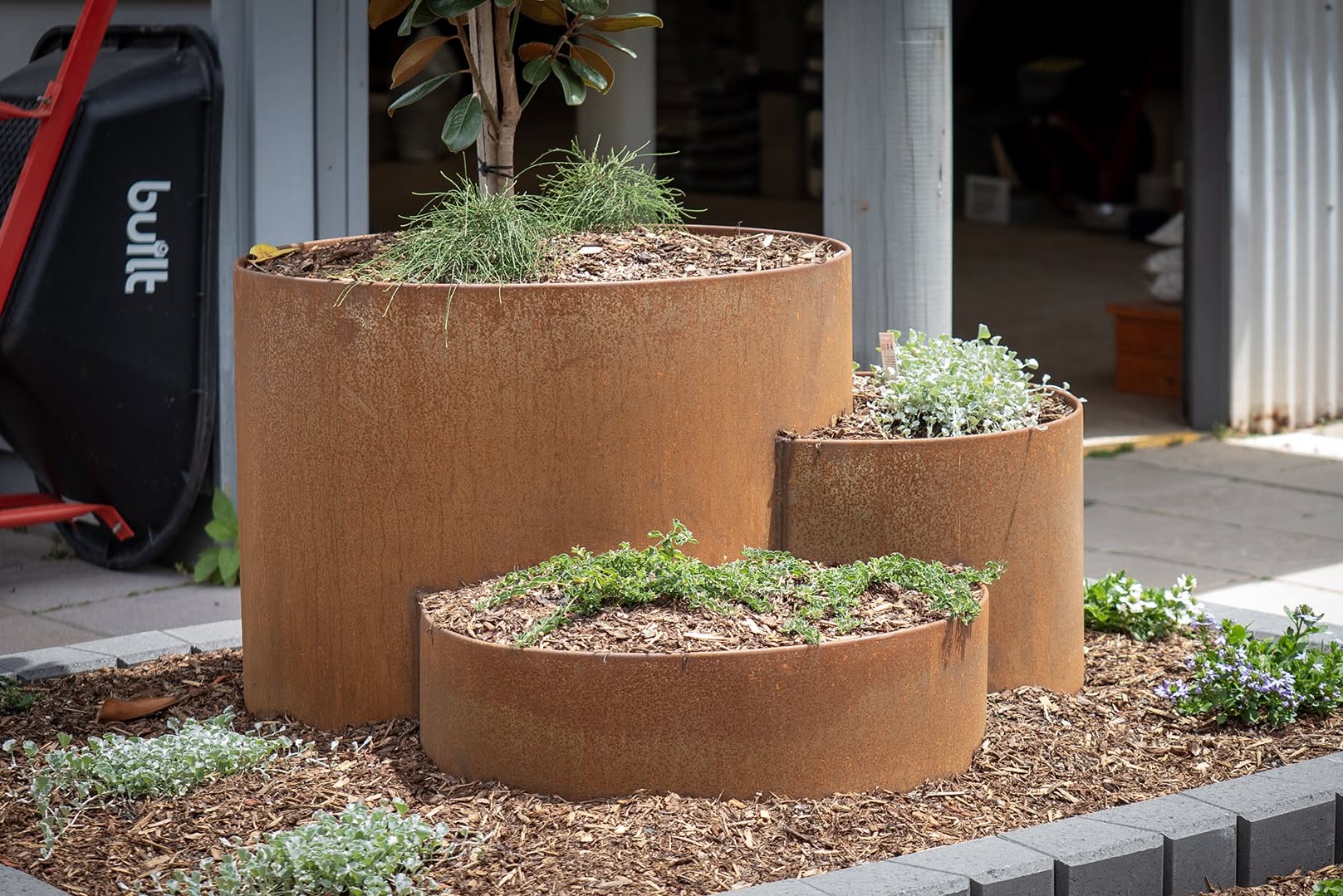
Pick two heights and stick to them, with maybe a third as a punctuation mark. Low rectangular planter boxes running along a fence, taller square ones at each end — that’s enough scaffolding. One very tall specimen planter somewhere in the composition gives the eye a place to land. Repetition is doing the structural work here; it’s what stops it looking like a collection of things rather than a design.
Grouping helps too. Three planter boxes of different heights clustered together read as a composition; three scattered across a garden at random just look like there wasn’t a plan. Honestly, the cluster approach is almost always better, even if it feels too simple when you’re planning it out.
What Steel Adds to the Equation
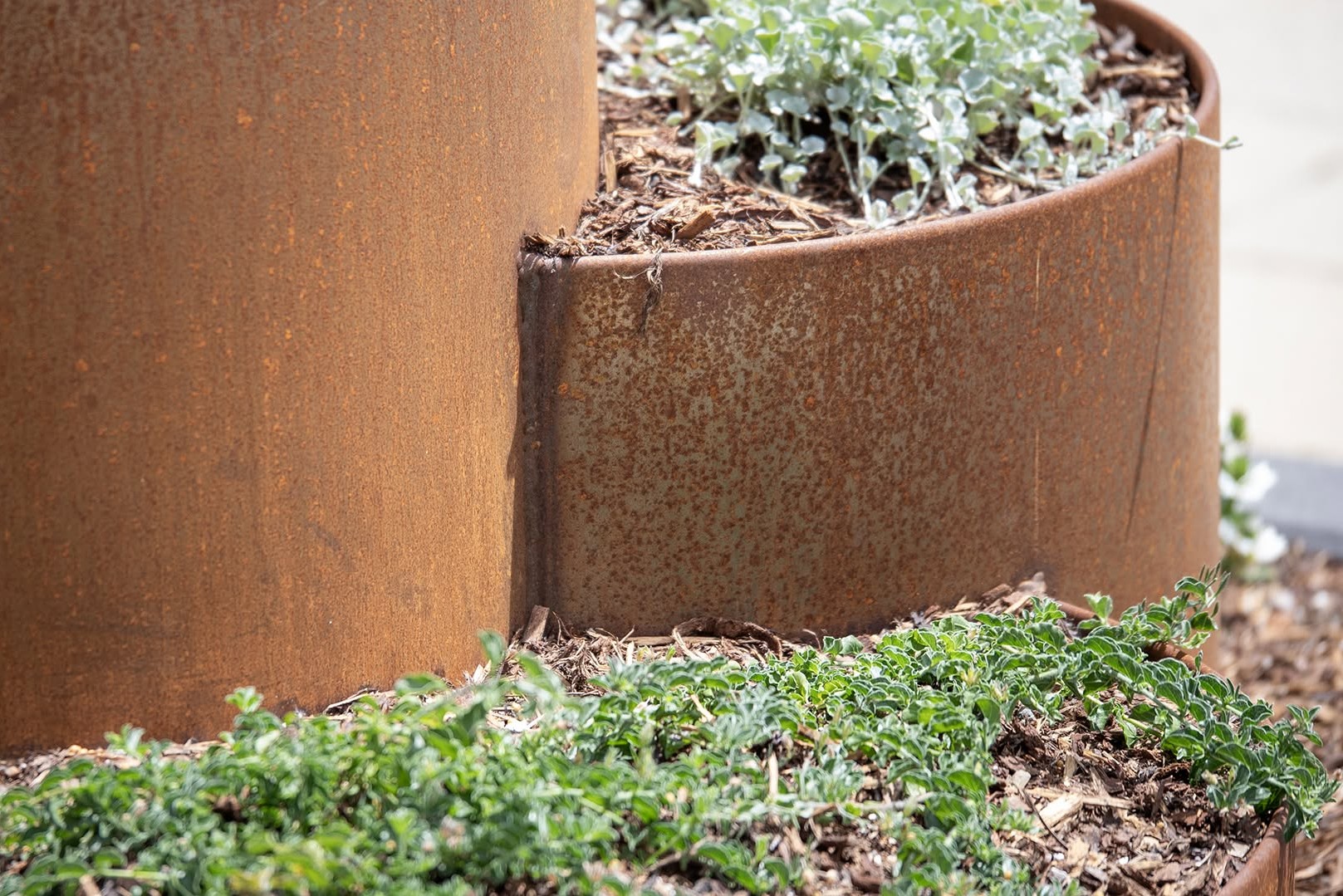
Material choice matters more than people expect. Timber has its moments, but leave it a couple of Australian summers and the problems start showing — warping, inconsistent weathering, that slightly bleached look that never quite reads as intentional. Steel goes the other direction. It ages into something, rather than just degrading. Corten in particular settles into a rust tone that stabilises and holds, which is not something you can say about much else you’d put in a garden permanently.
The other thing steel gives you is clean lines. When you’re working with layered heights, the silhouette of each planter has to hold up, because it’s going to be visible. A crisp steel edge reads at a distance in a way that a plastic or timber one often doesn’t.
ShapeScaper’s steel planters are made from Australian BlueScope Steel, which handles outdoor conditions — sun, rain, temperature swings — without the performance problems you sometimes see in imported alternatives. That’s not a small thing when you’re placing something permanently in a garden.
Planting to Match the Structure
What goes in the boxes either reinforces the height structure or collapses it. A trailer spilling over the front of a low box, something upright in the mid-height one, a proper architectural plant — a small cycad, a clumping grass, something with presence — in the tallest. Each tier does one job, which is what keeps the whole thing readable from a distance.
Avoid planting the same species across all levels unless you’re going for a very deliberate, minimal look. The contrast between tiers is what generates visual interest — the same plant at three heights just looks like the box is the feature, which might be fine, but it’s a different effect.
On a flat garden, planter boxes effectively build the topography the site never had. Getting that right doesn’t take many — sometimes three or four well-placed ones are enough to completely change how a space reads.