Designing Balcony Gardens with Planter Boxes
Check the load rating of your balcony slab before you do anything else. Not after you’ve bought the planter boxes, not once the soil is in. Most residential balconies sit somewhere between 150 and 300 kilograms per square metre, and a large steel planter box filled with wet soil can push close to 200kg. Get it wrong, and you’ve got a structural problem, not a gardening one.
Balcony gardening is mostly a problem of working with less. Less floor area, less shelter, less consistent moisture. Wind at balcony height tends to be stronger than people expect, and a container in full afternoon sun can be bone dry by evening. Timber struggles with all of this. Steel doesn’t.
Why Steel Planter Boxes Outlast Everything Else on a Balcony
Put a timber planter box through a few wet winters on a balcony and it starts to show — swollen joints, softening at the base, that greyish look that means the rot has already started working inward. Steel doesn’t do any of that. Corten is the interesting one: the rust on the outside is actually what’s protecting it, a dense oxidised layer that forms and then mostly stops. It’s not the same process as rust eating through a fence post. Galvanised steel is less visually dramatic but just as practical — no coating to reapply, nothing that needs attention season to season.
Corten Steel Planter Boxes Get Better With Age
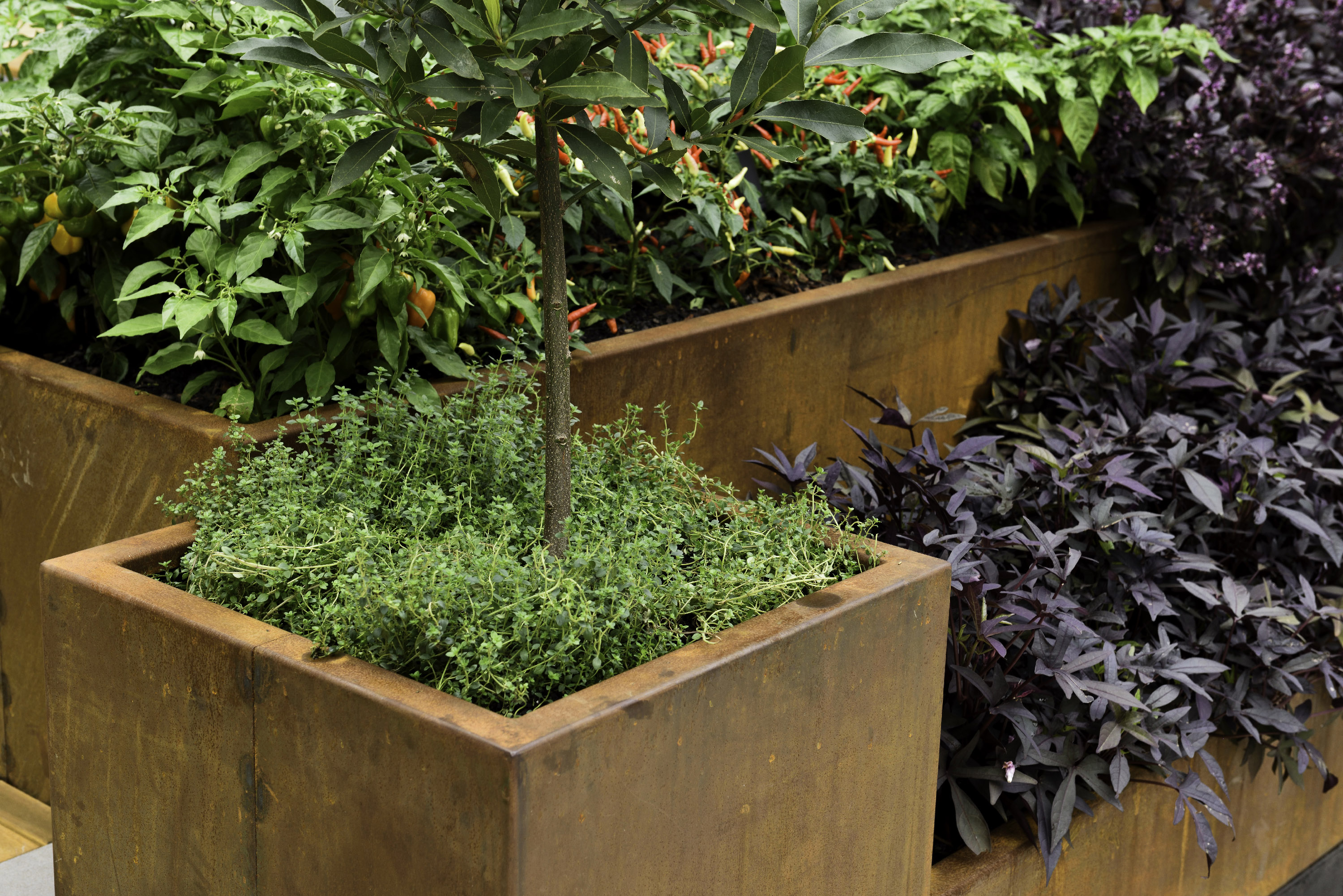
People sometimes ask whether the rust on a corten steel planter box is something to worry about. It isn’t. The colour that develops in the first year is uneven — patches of deep orange, some areas darker, nothing that looks manufactured — and it keeps shifting slowly before settling. Dark-leafed plants work well against it. So does anything silvery. You don’t have to do much to make the combination look intentional.
A more minimal balcony — concrete underfoot, clean lines — suits powder-coated steel in black or charcoal. It disappears into the background. Either finish works.
Getting the Size and Arrangement Right
The case for fewer, larger garden planter boxes is mostly practical. A small pot in summer needs watering every day, sometimes twice, and it’s not offering much root depth to anything worth growing. Five small ones clustered along an edge will dry out faster, crowd the roots, and look busier than intended. Two or three raised planter boxes, with room between them, tend to do a better job on all counts.
Narrow balconies make a good case for railing planters. The floor stays usable, plants end up at a height where you actually register them, and the weight distributes along the railing rather than loading a single spot on the slab.
A few things that affect placement more than most people factor in:
- Wind. Exposed corners are genuinely brutal — plants either snap, dry out, or spend the season looking beaten up. Stick to lower, stockier varieties in those spots. And the box needs enough weight that a strong gust can’t shift it.
- Sun direction. North-facing with morning light is good territory for herbs and most vegetables. West-facing afternoon sun is a different problem — harsher, drier, and it’ll kill off anything shade-preferring well before the season ends.
- Drainage. Sit the base of the planter off the surface, whether that’s on feet, a riser, or a tray. Water pooling under a metal planter box against membrane or tile is the kind of damage that shows up years later.
What to Grow When Space Is the Constraint
Running out of floor space isn’t necessarily the end of it. A narrow planter box against a fence, with a trellis attached, can take climbing beans or a passionfruit vine two metres up while barely registering on the ground.
Growing vegetables in containers is more viable than people tend to think — leafy greens, cherry tomatoes, capsicum all do well in a deep steel planter box as long as there’s enough direct sun, which usually means five or six hours minimum. Herbs are easier still. Basil, rosemary, thyme, mint — cut them hard and they produce better for it. Dwarf citrus take longer to establish but need almost no attention once they do.
The density mistake is almost universal. Everything goes in close because it looks full at planting, and six weeks later one plant has taken over. Space things out more than feels right on day one.
Scale Is the Thing Most People Get Wrong
Getting the box size wrong is more common than people expect, and it usually goes one of two ways — either the planter dominates and the balcony feels like a staging area, or it’s so small it looks like an afterthought. On a 10–12 square metre balcony, two or three boxes in the 60–90 centimetre range tend to hit the right note. Present enough to anchor the space, not so large that there’s nowhere to stand.