The Power of Structure at MIFGS 2026
By Charlie Albone
I always find the Melbourne International Flower and Garden Show a bit overwhelming in the best possible way. You walk in thinking you’ll take a quick lap, and before you know it, you’ve spent hours wandering through gardens that feel more like experiences than displays.
This year, what really stood out to me was how much structure played a role in those spaces. Not just the plants, but the way everything was shaped, defined and held together. And ShapeScaper steel was everywhere you looked, not in a loud, obvious way, but in that quiet, confident way good design tends to show up.
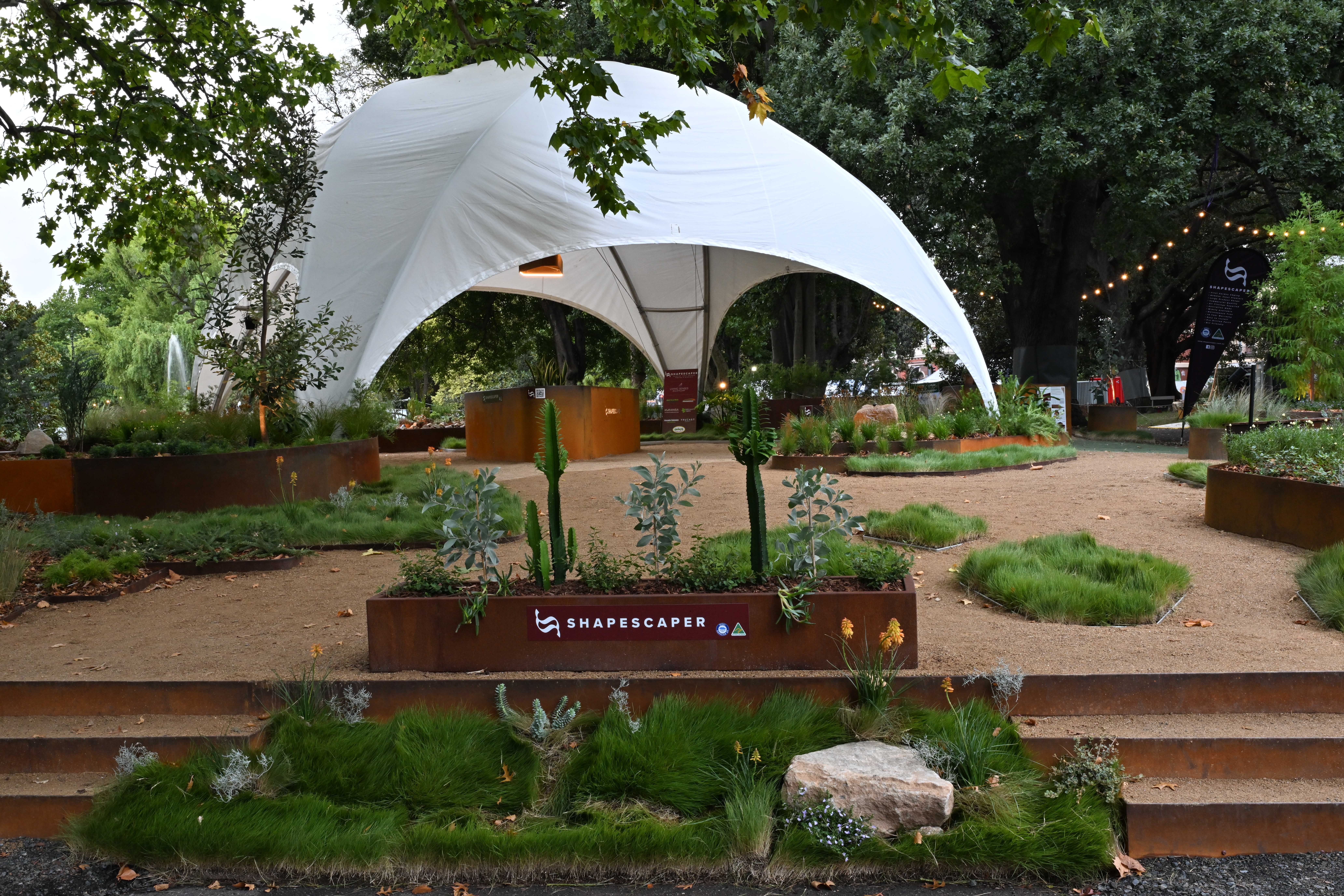
The ShapeScaper stand itself didn’t feel like a stand at all, designed by Living Senses Group, it felt like a garden you could step into and actually imagine at home. Set against the backdrop of one of the ponds, it had that calm, reflective quality water, planting and steel all working together. Clean lines in contemporary shapes softened by greenery, natural movement balanced with structure. It invited you to slow down and take it in.
What I liked most was how it guided you through the space. There were defined planting zones, subtle level changes, and those gentle curves that move you from one area to the next without you even thinking about it. It wasn’t just about showing products it was about showing how those products live in a garden.
Curved steel edging and raised planter beds added height and depth, giving the planting more presence. It’s something I always come back to layering a garden so your eye travels through it and this space did it beautifully.
Then you stepped out into the rest of the show, and that’s where it really clicked.
The Border Gardens was in its fifth year and they all started from the same point: a simple 2.4 x 2.4 metre square of ShapeScaper steel. From that one consistent framework, every designer took things in a completely different direction. Some leaned into soft, naturalistic planting that spilled gently over the edges. Others used the clean lines to create something more structured and architectural.
It was a great reminder that good design doesn’t come from having unlimited space, it comes from how you use what you’ve got. And that simple steel outline gave each garden a strong, consistent starting point while still allowing for complete creative freedom.
Beyond that, ShapeScaper products kept appearing throughout the show. In the student gardens especially, you could see how emerging designers were really embracing the material. One garden used steel edging to create flowing pathways that guided you through layered planting, while another used raised planter boxes to lift key elements and create focal points within a compact space. Each one approached it differently, but the result was the same structure that supported the design without overpowering it.
That’s what stood out to me most. It wasn’t just a product being used, it was a tool designers were shaping and adapting to suit their ideas.
Across the larger show gardens, it was the same story. Steel edging defining transitions between lawn and planting. Planter boxes adding height where it was needed. Terraced levels solving practical problems while adding visual interest. It all felt considered, deliberate, and quietly effective.
And that’s really what a show like this is all about. It brings together experienced designers and the next generation, all experimenting, pushing ideas, and finding new ways to shape outdoor spaces.
What ShapeScaper steel seemed to offer across all of those gardens was flexibility. The ability to create crisp geometry or soft curves. To define space without dominating it. To provide structure while still letting the planting be the hero. By the time I left, what stayed with me wasn’t just the individual gardens, but that underlying thread running through so many of them. Good structure, thoughtful detailing and materials that support the design rather than compete with it.
That’s what ShapeScaper brought to the show this year, not just a presence but a quiet confidence that good gardens start with strong foundations.