How to Choose the Right Size Planter Box for Your Plants
Choosing the right Planter Box Size can feel a bit overwhelming when you’re just starting out. You want your plants to be happy, right? Well, it’s not as complicated as it might seem. Think of it like picking out a bed for a growing child – you don’t want to get something they’ll outgrow in a week, but you also don’t want them swimming in it. We’ll walk through how to figure out the best Planter Box Size for whatever you’re planning to grow.
Key Takeaways
- The depth of your planter box is a major factor in what kind of plants you can grow, as it dictates how much room the roots have to spread.
- Smaller planter boxes (under 12 inches deep) are generally suitable for herbs, lettuce, and shallow-rooted annuals.
- Medium planter boxes (12-24 inches deep) work well for plants like tomatoes, peppers, beans, and most perennials.
- Large planter boxes (over 24 inches deep) are best for deep-rooted vegetables like rhubarb, potatoes, or larger shrubs and small trees.
- Always consider the mature size of your plant and its specific root system needs when selecting a Planter Box Size to avoid issues like waterlogging or restricted growth.
Why Planter Box Size Matters
Choosing the right size planter box is more than just picking something that looks good in your garden. It’s about giving your plants the best possible environment to thrive. Think of it like fitting clothes – too tight and they’re uncomfortable, too loose and they don’t serve their purpose. The same applies to your plants. A planter that’s too small will restrict root growth, leading to stunted plants that struggle to absorb nutrients and water. On the flip side, a planter that’s excessively large can hold too much moisture, potentially leading to root rot, especially in small outdoor spaces where drainage might be a concern. The ideal planter box provides just the right amount of soil volume to support healthy root development and maintain consistent moisture levels.
When selecting a planter, consider these points:
- Root Space: Plants need room for their roots to spread out and access water and nutrients. Insufficient space means a stressed plant.
- Moisture Retention: Larger volumes of soil in deeper boxes tend to retain moisture better, meaning you won’t have to water as frequently.
- Temperature Regulation: A good amount of soil also acts as insulation, protecting plant roots from extreme heat or cold.
Getting the size right from the start sets your plants up for success, saving you potential headaches down the track and leading to healthier, more productive plants.
Understanding Plant Root Systems
Different plants have vastly different needs when it comes to their roots. Paying attention to how a plant’s roots grow is key to selecting the right planter box. You wouldn’t put a tiny seedling in a massive pot, and you wouldn’t try to cram a mature shrub into a small container. It’s all about giving those roots the space and conditions they need to thrive.
Shallow-Rooted Plants
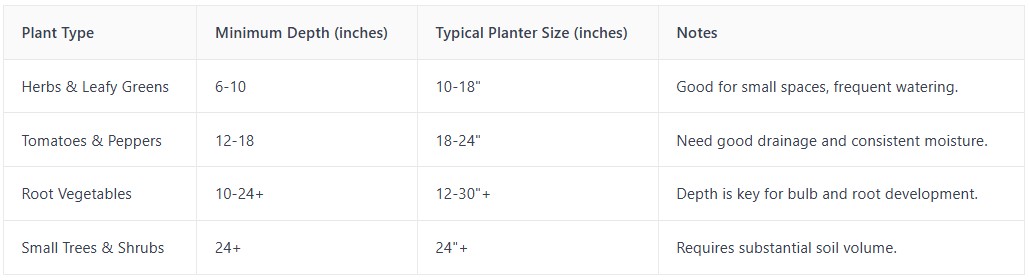
Many common garden plants, like lettuce, strawberries, and some herbs, have relatively shallow root systems. These plants typically spread out horizontally rather than digging deep into the soil. For these, you don’t need an exceptionally deep planter box. A box that’s around 6 to 10 inches deep is usually sufficient. This depth provides enough room for the roots to spread out comfortably without being restricted. It also means you won’t be using an excessive amount of soil, which can be a consideration for larger setups.
Deep-Rooted Plants
Then you have plants that are built to go deep. Think root vegetables like carrots, potatoes, and beets, or larger fruiting plants such as tomatoes and peppers. These plants send their roots down into the soil in search of water and nutrients. A minimum depth of 12 inches is generally recommended for these plants, with 18 to 24 inches being even better for optimal growth. Deeper boxes allow these plants to develop a strong anchor and access resources more effectively. If you’re growing potatoes, for instance, you’ll want a box that can accommodate the tubers as they grow downwards.
Vining and Spreading Plants
Some plants, like cucumbers, peas, or vining flowers, have a growth habit that requires consideration beyond just root depth. While their roots might not be excessively deep, they need space to spread out, and often, they require support for their above-ground growth. For vining plants, the planter box needs to be sturdy enough to support trellises or stakes. The depth is important, but so is the overall volume of soil, as these plants can be quite thirsty and nutrient-hungry. A planter that’s at least 12 inches deep and offers a good width is usually a good starting point.
It’s worth remembering that a planter box that’s too large can also cause issues. Too much soil can hold excess moisture, potentially leading to root rot, or it can dilute nutrients, making them less available to the plant. Always consider the mature size and specific needs of your plant.
Common Planter Box Sizes and Their Uses
Choosing the right size planter box is key to happy, healthy plants. The dimensions of your planter directly influence root development, moisture retention, and overall plant vigour. Let’s break down the common sizes and what they’re best suited for.

Small Planter Boxes (Under 12 inches deep)
These compact containers are ideal for smaller plants with shallower root systems. Think herbs, leafy greens like lettuce and spinach, and annual flowers. They’re perfect for balconies, window sills, or adding a splash of colour to a patio without taking up too much space. Because they hold less soil, they will dry out more quickly, so keep an eye on watering.
- Herbs: Most herbs, like basil, mint, and parsley, thrive in smaller boxes, needing at least 6-8 inches of depth.
- Leafy Greens: Lettuce, spinach, and arugula do well in boxes around 6-10 inches deep.
- Annual Flowers: Petunias, marigolds, and impatiens will flourish in boxes of similar depth.
Medium Planter Boxes (12-24 inches deep)
Stepping up in size, medium planter boxes offer more room for roots to spread and retain moisture for longer periods. These are excellent for a wider variety of plants, including many vegetables and larger flowering plants. You’ll find these are a popular choice for raised garden beds.
- Root Vegetables: Carrots, radishes, and beets appreciate the extra depth, generally needing at least 10-12 inches.
- Fruiting Vegetables: Tomatoes, peppers, and bush beans will benefit from the increased space, often requiring 12-18 inches of depth.
- Perennials: Many perennial flowers and smaller shrubs can be comfortably housed in medium-sized boxes.
Large Planter Boxes (Over 24 inches deep)
When you’re looking to grow larger plants, establish small trees, or create a substantial vegetable garden, large planter boxes are your go-to. These generous containers provide ample space for extensive root systems and hold a significant amount of soil, which helps maintain consistent moisture levels and protects roots from extreme temperature fluctuations. They are particularly well-suited for plants with deep or spreading root structures.
- Fruiting Trees and Shrubs: Dwarf fruit trees, berry bushes like blueberries or raspberries, and larger shrubs need the substantial volume and depth these boxes provide.
- Deep Root Vegetables: Plants like potatoes, sweet potatoes, and rhubarb require significant depth, often 18-24 inches or more.
- Vining Plants: Cucumbers, melons, and climbing beans will have the space they need to establish strong root systems and support their growth.
When selecting a planter box, always consider the mature size of your plant. A box that is too small will stunt growth, while one that is excessively large can lead to waterlogged soil and potential root rot if not managed carefully. Aim for a size that accommodates the plant’s current needs with room to grow, but avoid overwhelming it with excessive space.
Factors to Consider Beyond Plant Type
Available Space and Location
Before you get too carried away picking out the perfect planter, take a good look at where you intend to put it. Is it a sunny balcony, a shady patio, or an indoor nook? The amount of sunlight and shelter your chosen spot receives will influence what plants will thrive there, and consequently, the size and type of planter you’ll need. For instance, a large, heavy planter might be perfect for a permanent spot on a sturdy deck, but it wouldn’t be practical for a small balcony that needs to be cleared for storage.
- Consider the mature size of your plant: A towering shrub will need more space than a compact herb, both in terms of width and height.
- Think about accessibility: Can you easily reach the planter for watering and general care?
- Factor in wind exposure: Windy locations can dry out soil quickly and even topple smaller planters.
Drainage and Watering Needs
Proper drainage is non-negotiable for healthy plant roots. Without it, you risk root rot, which is a swift end for most plants. Most planters come with drainage holes, but their size and number can vary. You’ll also want to consider how often your chosen plant needs watering. Some plants, like succulents, prefer to dry out between waterings, while others, such as many vegetables, need consistent moisture.
- Check for drainage holes: If a planter doesn’t have them, you may need to drill some yourself, depending on the right material.
- Assess soil moisture retention: Porous materials like terracotta can dry out faster than plastic or glazed ceramic.
- Watering frequency: Match the planter’s drainage and material to your plant’s thirst.
A planter that’s too large can actually be detrimental, as it holds more soil than the plant’s roots can utilise. This excess soil can retain too much moisture, leading to soggy conditions that are bad for root health. It’s a balancing act to provide enough room for growth without overwhelming the plant.
Wrapping Up Your Planter Box Journey
So, choosing the right planter box size might seem a bit much at first, but really, it’s all about giving your plants the best chance to thrive. Think about how big they’ll get and what they need to stay happy and healthy. Whether you’re growing a few herbs on the balcony or a tomato plant that needs a bit more room, getting the size right means less fuss for you and more growth for them. Happy gardening!